

Dry vs Wet Dog Food: What Matters Most
Choosing dog food sounds simple until you’re standing in front of a shelf packed with kibble, cans, trays, and fresh-delivery meals. That’s usually when all the questions show up at once, and that’s pretty normal. Is dry food the better choice if you want something simple and easy to store? Is wet food easier on digestion? And does the best dog food really depend on your dog’s age, size, appetite, or a few other everyday things too?
To make things simpler, this guide looks at four real brands so dry and wet feeding can be compared in a practical, everyday way: Purina Pro Plan, Merrick, Fromm Family Foods, and Spot & Tango. No hype. The focus stays on what usually matters most when feeding a dog every day: moisture, taste, budget, storage, formula range, and whether the option is realistic to keep using over time. In many cases, that shapes the choice more than the marketing does.
That matters because the “best” option usually isn’t one format that works for every dog. Some dogs do really well on kibble. Others seem to need extra moisture, plus the stronger smell and taste that wet food offers. And plenty of owners end up somewhere in the middle, mixing formats based on what works in real life. The goal here isn’t to pick one universal winner. It’s to help you choose the dog food format and brand combination that fits your dog and your daily routine, and that you’ll realistically stick with.
What we’ll cover
- Purina Pro Plan
- Merrick
- Fromm Family Foods
- Spot & Tango
What really changes between dry and wet dog food
Before looking at brands, it helps to start with the basics most people compare: how long the company has been around, whether it sells both dry and wet food, whether pricing is easy to find online or in stores, and whether that information is simple to line up side by side.
| Brand | Founded | Dry Food | Wet Food | Public Price Example |
|---|---|---|---|---|
| Purina Pro Plan | 1894 parent brand | Yes | Yes | Varies by retailer |
| Merrick | 1988 | Yes | Yes | Varies by retailer |
| Fromm Family Foods | 1904 | Yes | Yes | About $45 for one cited Small Breed Adult Gold dry food retail example |
| Spot & Tango | 2017 | Yes | Fresh/nontraditional wet-style options | About $2, $6 per day for dry food estimates |
By themselves, these numbers don’t tell you which food is best, but they do show one useful thing: no single brand leads in every category for every type of dog. Older legacy brands often have wider formula ranges, which usually fits with how long they have been in the market. You’re also more likely to spot them in pet stores and grocery aisles. Newer direct-to-consumer brands can offer more personalization, but they may cost more and can take a bit of getting used to if they depend on a subscription.
Dry food usually has the edge when it comes to storage, simple portioning, and a lower cost per meal. Wet food often stands out for moisture and flavor, and a lot of dogs seem to like that. Plenty of dogs do well with either one as long as the formula fits their life stage and health needs. So the bigger question is often not really “dry or wet?” but which trade-offs matter most for that dog.
Compare 4 dog food brands
1. Purina Pro Plan
At a Glance
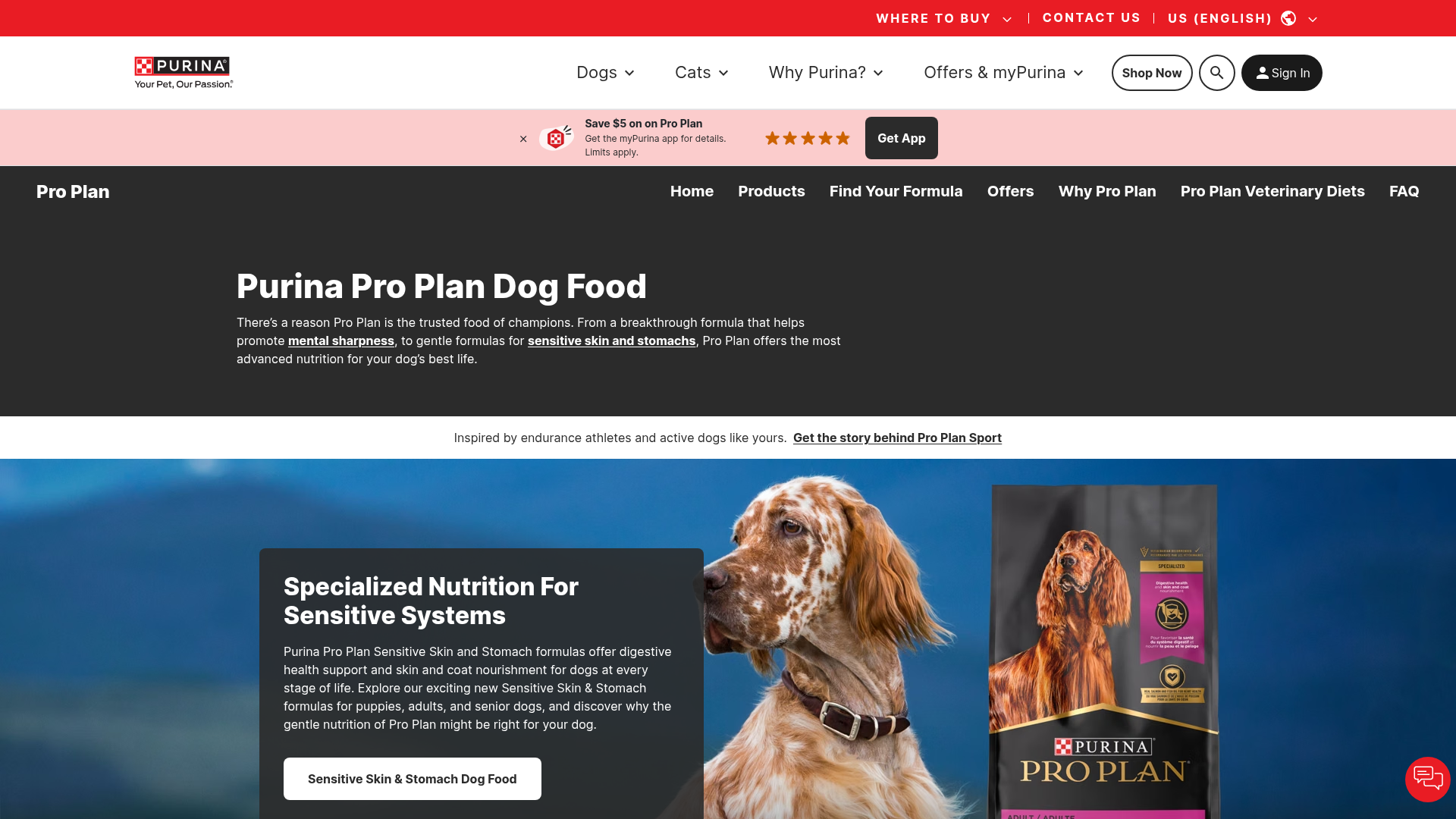
Purina Pro Plan is one of the easier brands to use when comparing dry and wet dog food without changing companies. It has a big range of kibble and canned formulas for puppies, adults, seniors, sensitive stomachs, active dogs, weight control, and more. There are a lot of options, honestly. That broad lineup makes it a practical choice for households that want flexibility through different life stages, which is usually really helpful. It’s also easy to find in major pet stores, grocery chains, and online shops, and that often matters more than people think. Even a food that works well can turn into a hassle fast if it’s hard to buy on a regular basis.
Core Features
- Dry kibble and wet canned dog food
- Formulas for puppies, adults, seniors, and dogs with sensitive skin or stomachs
- Sport and performance options
- Breed- and size-focused formulas
- Broad retail availability
Pros
- Wide variety: Makes it easier to compare dry and wet formats within one brand
- Easy to find: Common in major stores and from online retailers
- Life-stage coverage: Works for many ages and feeding needs
- Practical choice: A familiar option for owners who want consistency
- Specialized formulas: Helpful for dogs with specific feeding goals
Cons
- Can cost more than budget brands: Especially in specialized lines
- Less boutique appeal: Some owners just prefer smaller premium brands
- Retail pricing varies: Comparing exact costs isn’t always quick or easy
Who It’s For
Purina Pro Plan is a good fit for dog owners who want a reliable mainstream premium brand with both dry and wet options. It’s especially useful for someone with a puppy now who would rather stay with the same brand later through adulthood and senior years, since that kind of consistency often makes feeding simpler.
Unique Value Proposition
Its biggest strength is flexibility, and that shows up most when a dog’s needs change over time. With Purina Pro Plan, it’s easier to see whether a dog does better with dry food, wet food, or some mix of the two, and you don’t have to switch to a whole new brand every time. And if routines change, or getting older changes what works best, that shift will usually be easier for a lot of households.
Website: https://www.purina.com/pro-plan/dogs
2. Merrick
At a Glance
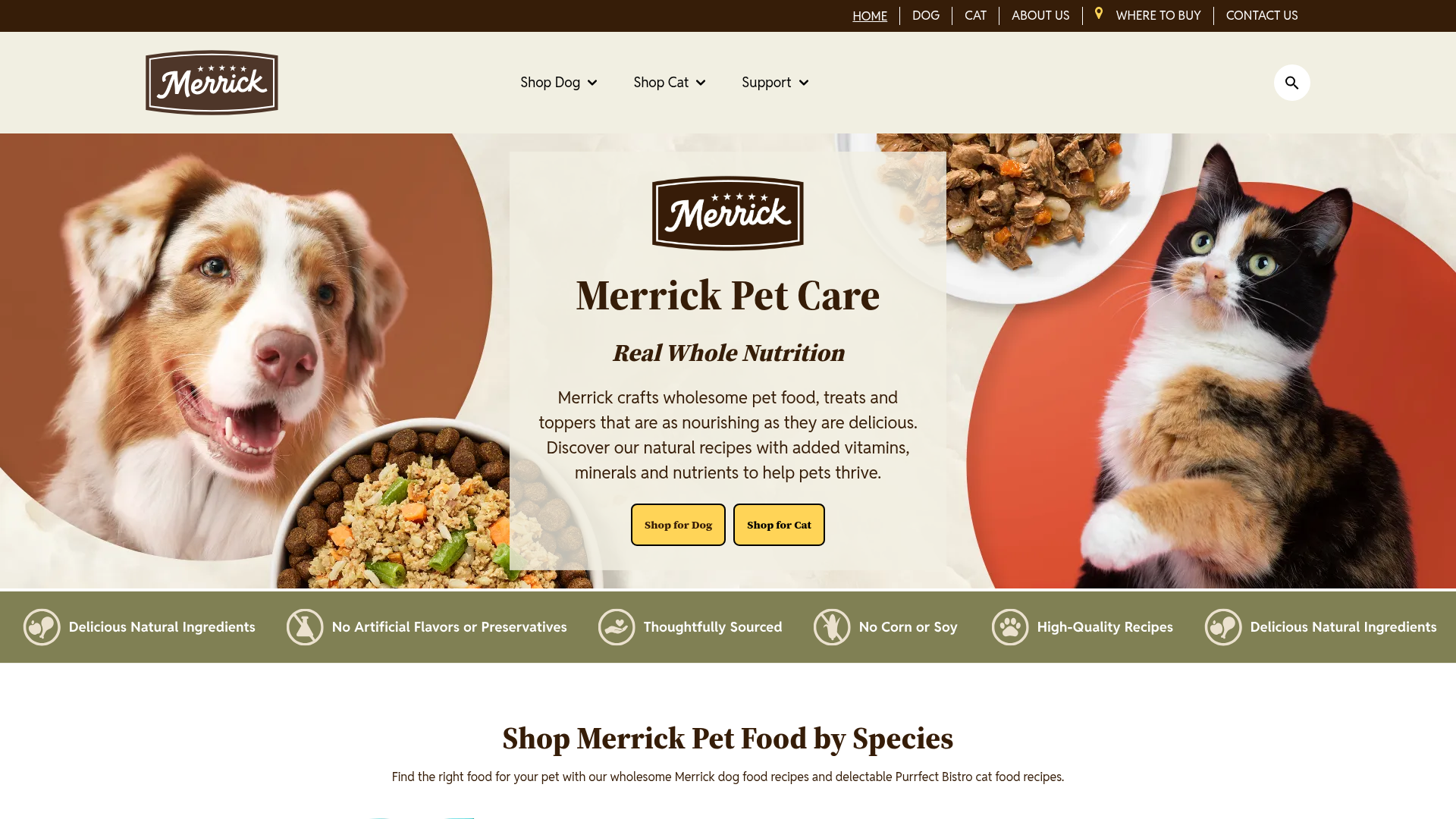
Merrick is a premium brand known for meat-forward recipes and an especially strong wet food lineup, with plenty of dry options too. For picky dogs, dogs that get bored at mealtime, or dogs that just seem to prefer richer flavor and texture, Merrick is probably worth a closer look. It also catches the eye of owners who want to see named meats on the ingredient list, and for a lot of shoppers, that matters. The biggest drawback is the cost. Merrick usually costs more than mainstream options on the shelf, so it generally makes the most sense when food quality and mealtime appeal matter more than spending as little as possible.
Core Features
- Dry and wet dog food options
- Grain-free recipes, plus healthy grains options
- Named meat emphasis in many formulas
- Life-stage formulas and options based on size
- Strong canned food lineup
- Premium positioning
Pros
- Great palatability: Often a good choice for picky eaters
- Meat-forward recipes: A real plus for shoppers who pay close attention to ingredient lists
- Wet food depth: Especially useful if having lots of canned variety matters
- Dry and wet flexibility: Helps owners compare formats within the same brand
- Premium feel: Appeals to owners looking for named meats, wet food variety, and more life-stage choices
Cons
- Higher cost: Usually not the best fit for tighter food budgets
- Less vet-style positioning: Some owners are simply more comfortable with a more clinical formula lineup
- May be richer than needed: Some dogs just don’t need a premium meat-forward recipe
Who It’s For
Merrick makes the most sense for owners who put a lot of weight on taste, texture, and that premium-ingredient angle. It works especially well for dogs that need a little extra encouragement at mealtime, because some really do. It also makes sense for owners who want wet food to have a bigger role in the feeding routine, whether that means using it as a topper, serving it as part of dinner, or making it the full meal. That’s pretty simple, and for many households, that’s exactly the appeal.
Unique Value Proposition
One thing that sets Merrick apart is that its wet food feels like a real part of the meal, not just a little extra on the side. If dry food is convenient but a dog isn’t that interested in it, Merrick gives owners another route: premium dry formulas with strong wet options for topping, rotating, or switching over completely. In my view, that’s especially useful when a dog starts losing interest in the bowl, seems to want more texture, or just eats better with canned food mixed in.
Website: https://www.merrickpetcare.com
3. Fromm Family Foods
At a Glance
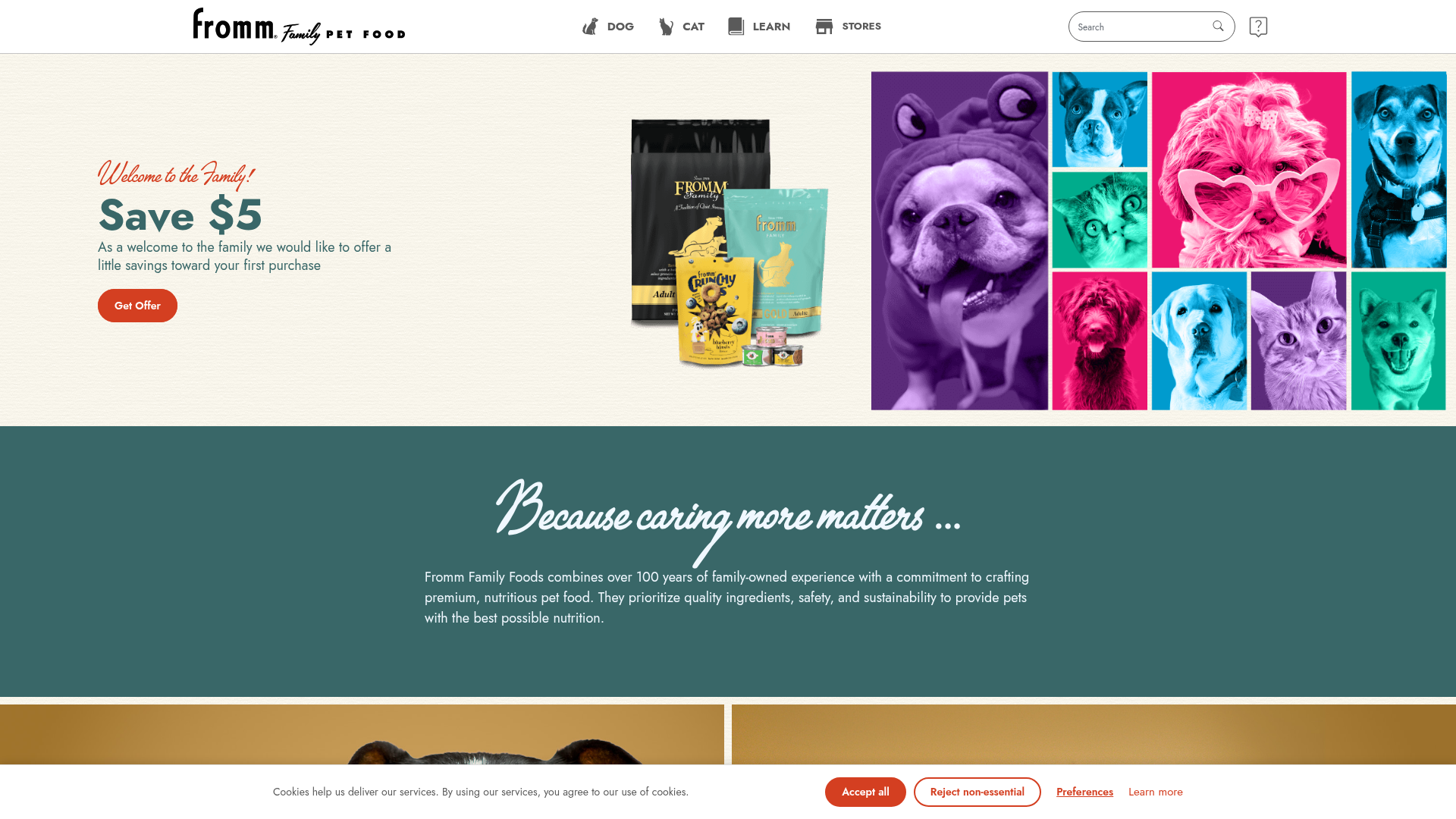
Fromm Family Foods has been around a long time and is still family-owned, which tends to appeal to shoppers looking for premium dog food with a more traditional feel and clear ingredient information. It offers both dry and wet recipes, so there’s a bit of variety in the bowl. Its reputation often seems strongest among owners who pay close attention to dry food quality, recipe details, and the brand’s long history. The lineup is smaller than what you’ll see from some larger national brands, but that isn’t always a bad thing. For some owners, fewer, clearer choices are easier than sorting through a huge wall of formulas.
Core Features
- Dry and wet dog food recipes
- Puppy and adult options, plus weight-management recipes
- Support for large and small breeds
- Ingredient details on the website
- Long brand history
- Family-owned identity
Pros
- Strong transparency: Helpful for shoppers who like reading labels and checking ingredient details
- Long heritage: Can give buyers more confidence if they care about brand history
- Premium dry food appeal: A good fit for homes that mostly feed kibble
- Lineup covers the basics: Includes puppy and adult recipes, plus options for large and small breeds
- Clear brand identity: It feels less generic than some bigger competitors and may be easier to understand
Cons
- Fewer formulas than giant brands: There’s less room for very specific customization
- Availability can vary: Some buyers may need to shop through independent retailers
- Premium pricing: It’s usually not the cheapest option
Who It’s For
Fromm works well for owners who don’t mind spending a little time reading labels and want a premium brand with a long track record. It likely makes the most sense for households that mostly feed dry dog food but still want wet options for rotation or as a meal topper, especially if their dog gets bored easily.
Unique Value Proposition
What sets Fromm apart is its simple approach, along with trust and transparency. It’s a solid choice for people who aren’t after the most hyped brand or the biggest formula catalog. They’re usually looking for a dog food brand with history, clear information, and enough variety to keep a steady feeding routine going without making the whole process feel overwhelming. That kind of simple, steady approach often works well for buyers who want confidence without too many extra decisions.
Pricing: One cited retail example listed Fromm Small Breed Adult Gold Premium Dry Dog Food at about $45, depending on the retailer and bag size.
Website: https://frommfamily.com
4. Spot & Tango
At a Glance
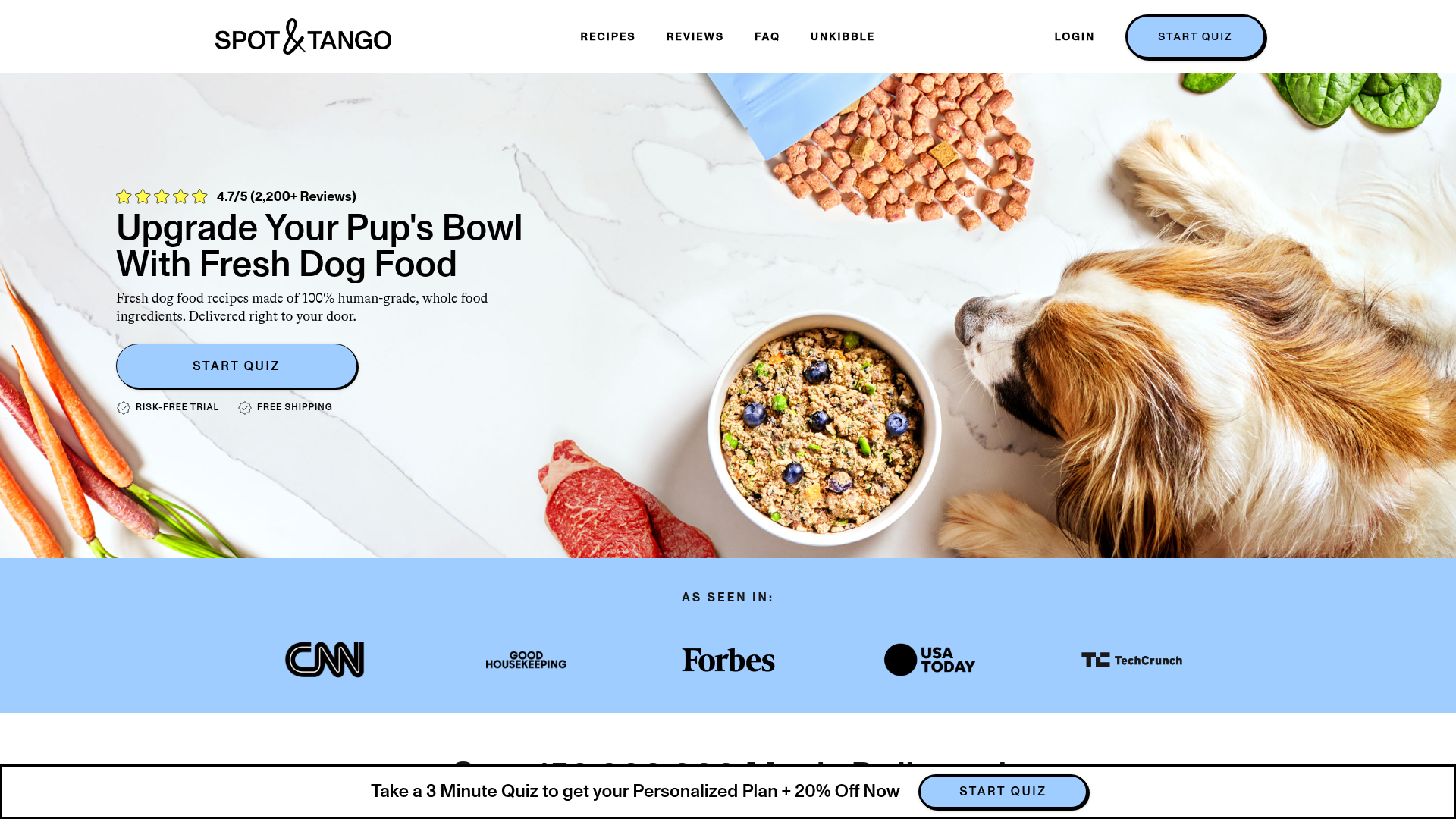
Spot & Tango takes a somewhat different approach than the other brands listed here. It’s a newer direct-to-consumer company built around convenience, personalization, premium positioning, and home delivery. Instead of offering a simple kibble-versus-can choice, the brand usually gets owners thinking more in terms of feeding plans, recurring shipments, and meal estimates based on their specific dog. That’s not quite the same as grabbing a bag off the shelf at the store. If you like having a subscription handle the basics, that can be a real plus. Other owners may find it less flexible, especially if they’d rather shop in person or change foods whenever they want.
Core Features
- Direct-to-consumer ordering
- Dry-style and fresh food options
- Personalized meal plans
- Subscription delivery model
- Premium ingredient-focused marketing
- Dog-specific cost estimates
Pros
- Convenient delivery: Helpful for busy households, especially for anyone who doesn’t want to make regular store runs
- Personalized approach: Can feel more tailored to a dog and its feeding needs
- Modern feeding style: Appeals to owners who want less guesswork with portions and planning
- Visible plan estimates: Makes it easier to get a rough cost idea before committing
- Fresh-focused appeal: A good fit for owners looking beyond standard pet store shelves, especially when traditional options feel a little limited
Cons
- Subscription model isn’t for everyone: Some buyers would rather do a simple store pickup or only buy food when they need it
- Higher ongoing cost: Premium convenience usually costs more, and that often adds up over time
- Less traditional wet-food setup: It may not be the best fit for someone who specifically wants classic canned options
Who It’s For
Spot & Tango tends to work well for owners who want convenience, home delivery, and a feeding plan that feels more tailored. It often works especially well for people who are comfortable with premium pricing and like the idea of a brand helping with portions and the overall plan setup. That seems to be a big part of the appeal.
Unique Value Proposition
The main value here isn’t just the food itself. What draws a lot of people in is the system around it. For some owners, that probably makes meal planning, reordering, and portioning easier to keep track of. If the bigger issue is staying consistent with feeding, rather than choosing between dry and wet food, Spot & Tango may be a strong option. In many cases, that’s what really makes it different.
Pricing: Reported plan references put dry food at about $2 to $6 per day depending on dog size and needs, and some comparisons list about $12 to $18 per week.
Website: https://spotandtango.com
How they compare on the numbers that matter
If price visibility and the feeding model matter more than the marketing talk, this lays out the clearest side-by-side comparison, which is usually what people want. Here, the focus is on practical details rather than branding.
| Company | Founded | Dry Food | Wet/Fresh Option | Public Price Signal |
|---|---|---|---|---|
| Purina Pro Plan | 1894 parent brand | Yes | Yes | Varies by retailer |
| Merrick | 1988 | Yes | Yes | Varies by retailer |
| Fromm Family Foods | 1904 | Yes | Yes | About $45 cited retail example for one dry formula |
| Spot & Tango | 2017 | Yes | Yes, fresh/nontraditional | $2, $6 per day dry estimate; some cited comparisons show $12, $18 per week |
From the chart, Purina Pro Plan looks like the widest practical option. Merrick sits a bit more on the premium side and puts plenty of weight on taste and meal appeal. Fromm feels more heritage-focused and transparent, while Spot & Tango is the convenience-first outlier in a pretty different lane. That means the best fit often depends more on a dog’s routine than on brand popularity. For easy restocking, support for puppies, adults, and seniors, plus dry and wet food in one place, Purina Pro Plan is hard to beat. Merrick makes a strong case for dogs that get bored at mealtime. Fromm is a notable pick for premium dry food from a long family-owned company. If delivery and personalization matter most, Spot & Tango will likely seem like the most modern option here.
So which one should you pick?
For most households, Purina Pro Plan is probably the easiest all-around pick. It makes dry-versus-wet comparisons simpler, and the formula range is one of the widest, which can help. Merrick can be a good match for picky eaters, and it also makes sense for owners who want wet food to have a bigger role at breakfast or dinner. Fromm Family Foods is a good premium pick for people who want ingredient transparency and usually prefer a kibble-first routine, since that approach often suits them well. Spot & Tango tends to work best for busy owners if convenience, home delivery, and a more personal feeding setup are high on the list. It’s a practical option.
Dry dog food usually wins on cost and convenience, while wet food often stands out for moisture and for making meals a bit more interesting. If your dog is healthy and eating well, either one can work. And if you want an easy middle ground, mixing a high-quality dry food with a little wet food on top often gives people the balance they want: everyday convenience, extra flavor, and a bit more moisture.
Make your choice easier at home
When you’re choosing dog food, it helps to look at your dog’s actual day-to-day habits instead of the marketing. A few basic questions can make the choice easier: Is your dog getting enough water? Does your dog look forward to meals, or do they turn into a struggle? Do you need something you can store easily in your space and work into your daily routine, whether that means a small kitchen or a full pantry? Are you feeding just one dog or more than one? And how much daily prep will you honestly still be doing a month from now?
That’s where a clear framework helps. It may be simple, but it’s genuinely useful. True Pet Market sticks to practical pet care guidance, so owners can compare options without getting buried in buzzwords. If you want help sorting through feeding style, ingredient priorities, routine changes, or ways to mix formats without making it all feel more complicated, True Pet Market is a good place to keep learning, especially if you’re still narrowing things down.
For a lot of homes, the best fit is neither fully dry nor fully wet. It’s something you can afford, store, serve, and, usually, keep up with over time. Begin with the format your dog is most likely to do well on, then make slow adjustments based on energy, appetite, stool quality, and body condition. Keep it realistic. Usually, consistency matters more than making every meal perfect. More simple pet-buying guidance and useful dog food tips are here: this pet care resource.
Frequently Asked Questions
What matters most when choosing dog food?
First, look at your dog’s age, size, activity level, appetite, and whether there are any stomach or skin issues. After that, consider practical things such as moisture, storage, how easy it is to serve, and the daily cost. The right dog food should match your dog’s needs and still be something you can keep feeding consistently. Small details matter.
Is dry or wet dog food better?
There isn’t one that’s automatically better for every dog. Dry food is simpler to store and usually cheaper over time. Wet food, though, can tempt picky eaters and adds more moisture to the diet.
A lot of owners do best with dry food as the base, then mix in some wet food for extra flavor and variety.
How can I tell if a dog food is working well?
When a food suits them, you usually see it in steady energy, healthy body condition, normal stools, a solid appetite, and a coat that stays in good shape over time. Not just excitement at mealtime. Dogs don’t need to seem wildly excited at every meal for a food to be right. The real sign is how they’re doing after a few weeks.
How much should I expect to spend on dog food?
That depends on the brand, the format, and your dog’s size. Prices can vary a lot from one retailer to another. In the research for this article, one cited example of Fromm dry food cost about $45. Spot & Tango estimated dry food at around $2 to $6 per day, depending on the dog profile. Wet food or fresh-style plans often increase the daily cost.
How long does it take to see results after switching dog food?
A lot of dogs begin to settle in within a week or two, but seeing the full results can still take several weeks. Take it slow, especially if you’re moving between dry and wet food or changing protein sources. Switching over bit by bit can help cut down on stomach upset and makes it easier to tell whether the new food works.
Where can I learn more about comparing dog food without getting overwhelmed?
If you’re looking for straightforward, practical help rather than marketing-heavy advice, True Pet Market gives pet owners a useful way to sort through dog food options, feeding routines, and everyday buying decisions. It’s most useful when you’re comparing options explained in plain language before you choose.


